World Tapir Day
  • Home
  • About WTD
  • Tapirs
    • Baird's Tapir
    • Brazilian Tapir
    • Malayan Tapir
    • Mountain Tapir
    • Other Tapir Species
  • Events
    • Past Events
    • Art
  • Resources
    • Media Coverage
    • Art, Craft and Puzzles
    • Schools
    • Links
  • Contact Us
    • Credits
  • Blog

WTD Visit to Dudley Zoological Gardens

3/7/2017

3 Comments

 
Picture
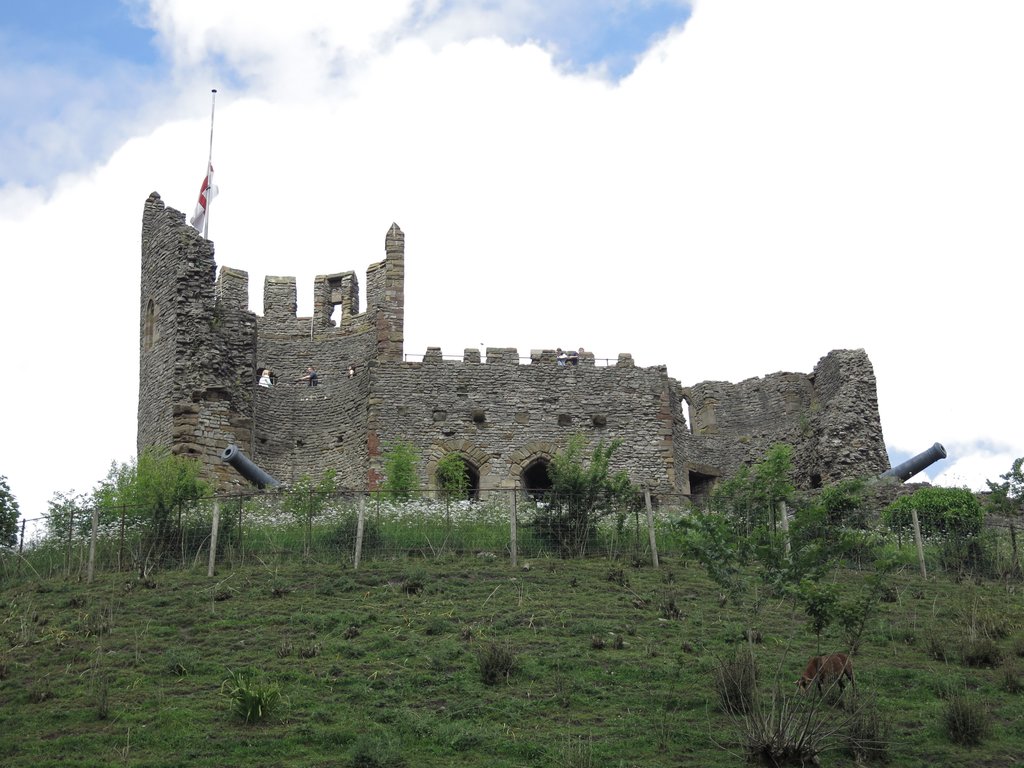
Dudley Castle ruins - it was not rebuilt after the fire in 1750 that destroyed it.
Picture
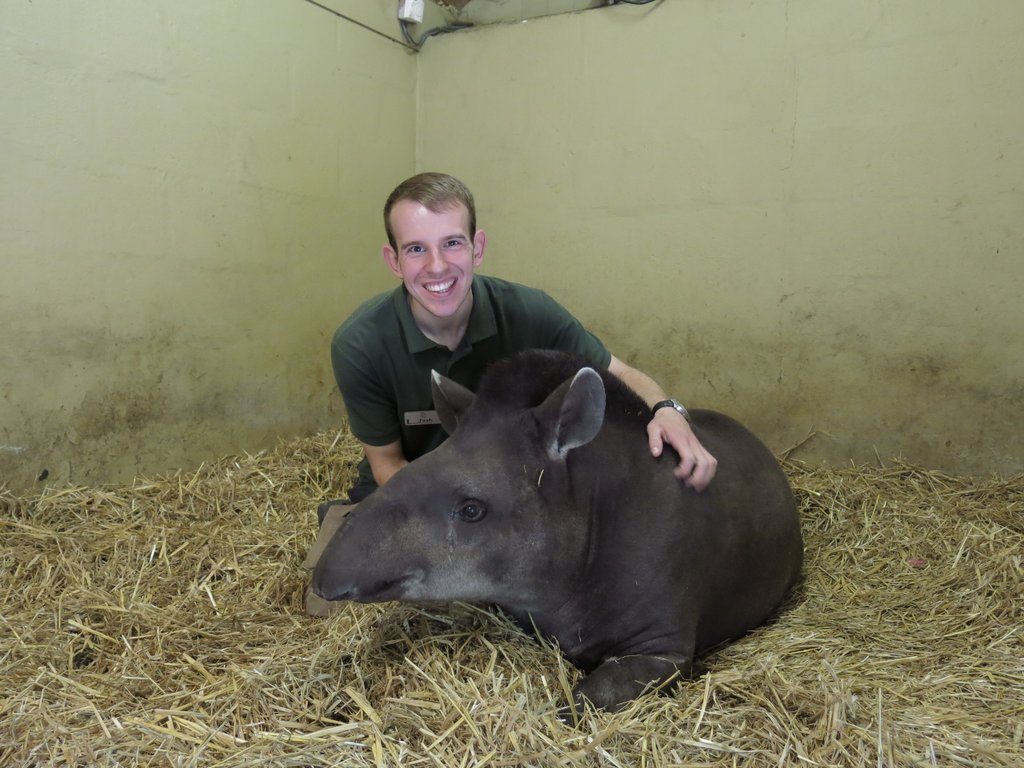
Trainee Zookeeper Josh Luxton and Chico - "Cheeky Chico" to his friends.
Picture
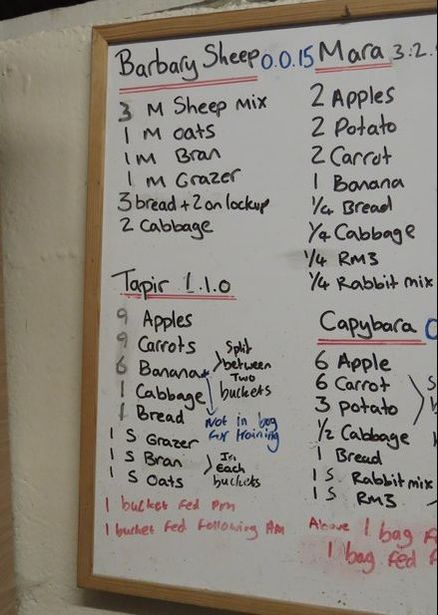
Ever wondered what a tapir eats in a day? This is Chico's daily menu.
Picture
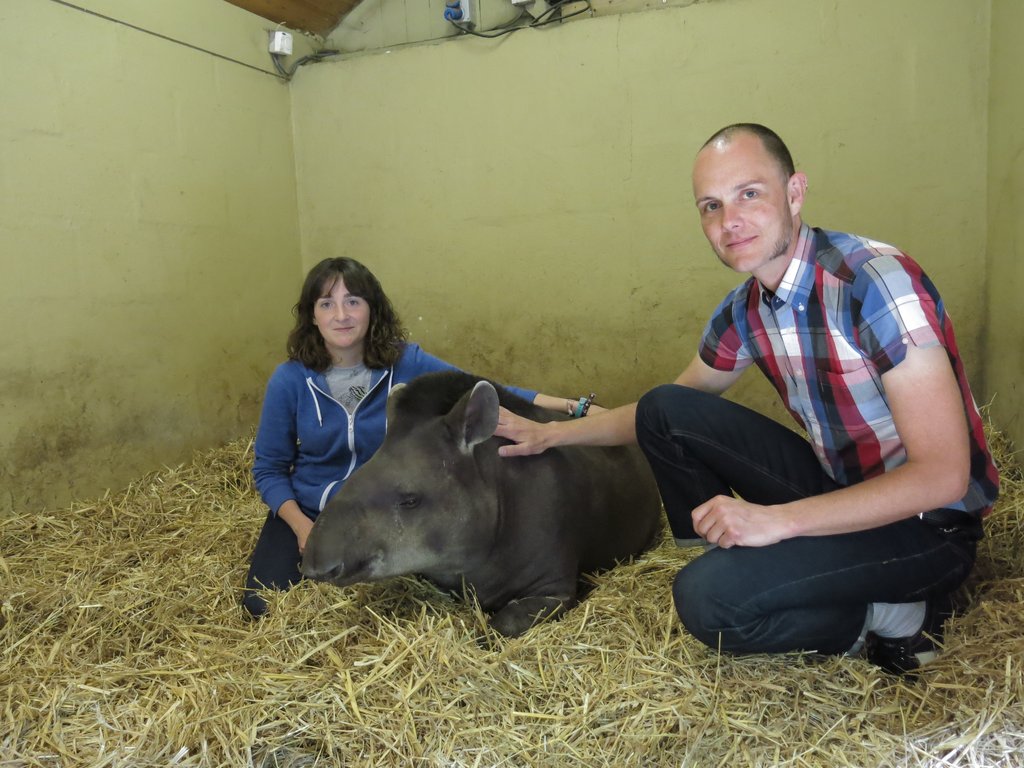
Sarah and Anthony, your UK and Australian WTD people, with Chico.
At the end of May, Sarah and I visited Dudley Zoological Gardens (DZG) in the British West Midlands.  For the two of us, it was our first meeting: although we've known each other for many years online, we'd never met in person.  As WTD's UK-based person, Sarah is much more local to DZG than I am (I live in Australia).

DZG has participated in WTD activities for some years, having hosted its first celebration in 2010, and for the last three years.  It's understandable that they have been so active: DZG has a very successful Lowland tapir breeding program.  At the time of our visit, Meena had given birth to her sixth calf only three days beforehand.  The calf's birth was still secret, and almost nobody had been able to see her yet.  Whilst we were also unable to see her, it was a privilege to be let into the secret (and be sworn to secrecy to keep it a secret until the official announcement!).

At the time of our visit in late May, DZG had just celebrated its 80th anniversary.  It is located in and around the ruins of an 11th century castle, which burned down in 1750.  Much of DZG's grounds is heritage listed, which makes modernising animal enclosures a challenge as they cannot be modified in any significant manner (even down to the colour of the paint that may be used).  In addition, the historical lack of financial support from the British Government also makes the upkeep of the castle ruins and enclosures and expensive undertaking.

Working within such confines is challenging for DZG and its staff, but one that it is taking on with relish.  It has recently been successful in obtaining £1.15 million grant from the Heritage Lottery Fund for restoring the tectons and other buildings, has been successful in obtaining a £4.5 million from the European Regional Development Fund in 2011, and has undertaken a fundraising campaign as part of its 80th anniversary celebrations.  It is an exciting time for DZG, and the efforts that its staff have made in recent years are clearly visible.

DZG plans to house animals as appropriately as possible to improve their welfare.  This includes steps to ensure that smaller species are housed in enclosures that once housed much larger animals, so that the restrictions of the heritage listing is reduced as much as possible.  Where possible, smaller enclosures have been merged to form larger ones, and there is a long list of future improvements planned.  Through the greater use of plants, animals will have greater privacy, whilst balancing the expectations of zoo visitors.

Sarah and I were warmly hosted by Assistant Curator Jay Haywood and Trainee Keeper Josh Luxton, both of whom spent much of their day hosting us.  It should come as little surprise that the highlight for both of us was spending a lengthy time with Chico, father to new calf Luna, and who turned fifteen a few days after our visit.  Chico also did not object to the extra attention that he received - there cannot be many tapirs in zoos that do not enjoy having their stomachs rubbed!

Aside from spoiling a much-loved tapir, we were also able to discuss Dudley Zoo's fantastic support for WTD, and how it can evolve in future years, as well as how DZG can further increase the profile of its tapirs (it already does a pretty decent job with many news stories about them).  Since returning to Australia, I did enjoy seeing that our suggestion for naming Luna was used to great effect!

Both Sarah and I are extremely grateful to Dudley Zoological Gardens - and in particular to Jay and Josh - for the extremely warm welcome we received during our visit, and look forward to closer collaboration in the future between DZG and WTD.

-- Anthony.
3 Comments

Tapir news: February/March 2015

9/3/2015

1 Comment

 
Picture
Welcome to the latest WTD update.  It's a little late to be the February one, but as the month is so short, it has slipped into March.  In the interest of not delaying it any further, here it is - short and to the point!

Tapir reports and news highlights: February 2015
Malaysian online magazine Poskod.my reported on the #tapitapir campaign to raise awareness about the Malayan tapir. During the Malaysian leg of the "1600 Pandas" world tour, a group of Malaysians decided to crash the Panda World Tour with a model of a single tapir, accompanied by a sign: #TapiTapir.

The Tapir Specialist Group (TSG) has updated its Tapir Veterinary Manual. It is an updated version of the first Tapir Veterinary Manual published by the IUCN/SSC TSG in 2007. Several veterinarians, biologists, nutritionists, reproduction physiologists and researchers reviewed and made contributions to this document based on their in-situ and/or ex-situ experience with the four tapir species. The 13 Chapters and several appendices in this manual offer valuable information on many important topics for veterinarians working with tapirs, including: handling tapirs in the wild and in captivity, anesthesia protocols, treatment protocols and guidelines for medical and nutritional care.  The Manual is available from the TSG website.

The Tapir Preservation Fund has launched its new website as part of its efforts to raise tapir conservation efforts.  The TPF is a nonprofit organisation that works for the conservation of the four tapir species that inhabit the tropics of Central America, South America, and Southeast Asia. It raises funds to deliver to field projects focused on the conservation of threatened tapir populations. Sheryl Todd has been involved with tapir conservation and education since she first rescued a Brazilian tapir - Stanley K - over four decades ago.. 

A Malayan tapir had to be rescued from a ditch in Kuantan in Malaysia, having fallen into a ditch.

Tapir births
Tapir births have been reported at:
  • Malayan tapir, Antwerp Zoo, Belgium
  • Malayan tapir, Lowry Park Zoo, United States
  • Brazilian tapir, Zoo Brno, Czech Republic
  • Brazilian tapir, Jaderpark, Germany

-- Anthony

1 Comment

    About

    The World Tapir Day blog. Posts about World Tapir Day, tapirs, conservation, the environment and random tapir-related topics.

    Archives

    April 2019
    April 2018
    July 2017
    April 2017
    February 2017
    June 2016
    May 2015
    April 2015
    March 2015
    February 2015
    January 2015

    Categories

    All
    Australia
    Births
    Brands
    Brazil
    Cherng
    Climate Change
    Conservation
    Dudley Zoo
    Events
    France
    Fundraising
    Malaysia
    Media
    News
    Popular Culture
    Rainforest Trust
    Suzanne Davenport
    Taiwan
    Tapir Art
    Tapir Specialist Group
    United Kingdom
    United States
    Website
    WTD 2015
    WTD News

    RSS Feed

Website by Tapir Design

  • Home
  • About WTD
  • Tapirs
    • Baird's Tapir
    • Brazilian Tapir
    • Malayan Tapir
    • Mountain Tapir
    • Other Tapir Species
  • Events
    • Past Events
    • Art
  • Resources
    • Media Coverage
    • Art, Craft and Puzzles
    • Schools
    • Links
  • Contact Us
    • Credits
  • Blog